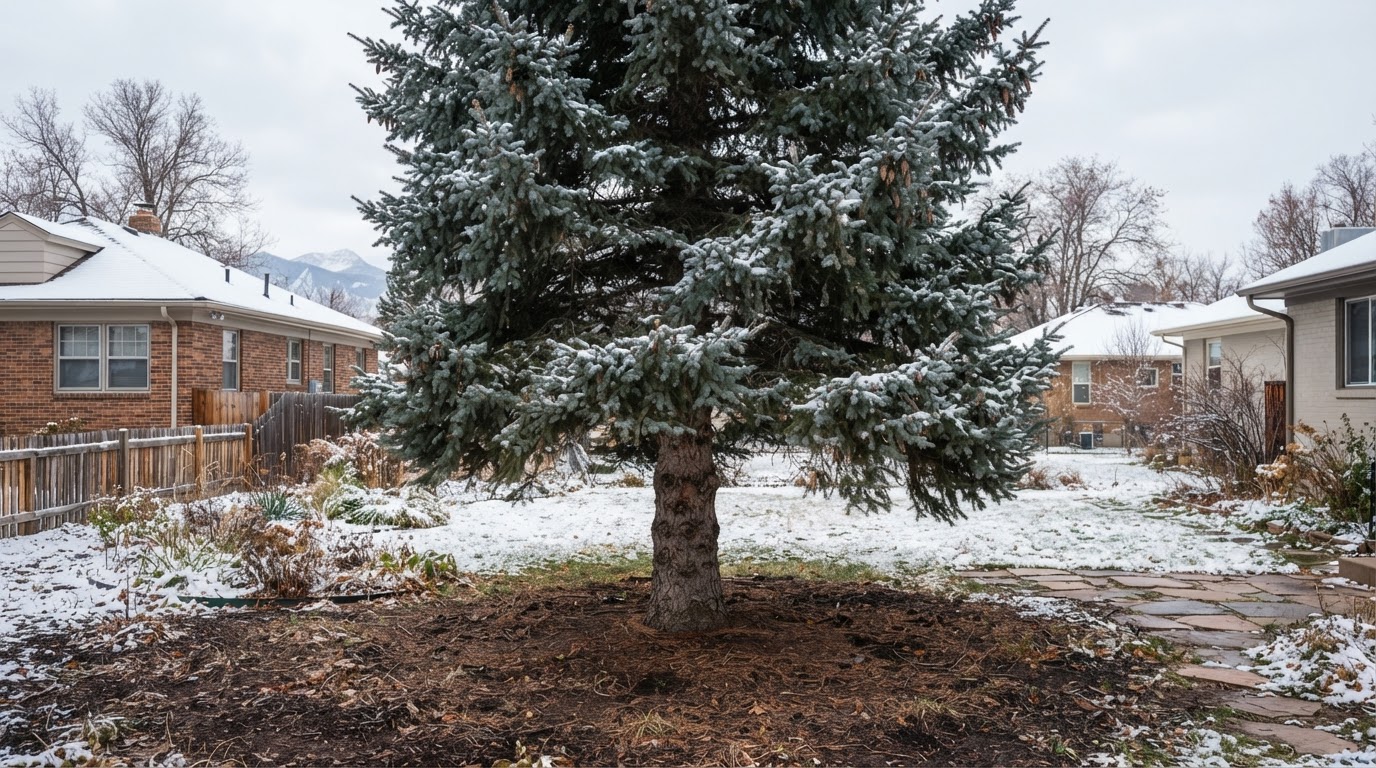
Do Trees Really Need Water in Winter?
Yes, sometimes. Dormant trees are not actively growing leaves, but their roots and living tissues still need adequate moisture.
Colorado winters can include:
- long dry periods
- low humidity
- wind
- sunny days
- frozen surface conditions followed by warm spells
- limited snow cover
When the soil stays dry for weeks, trees can experience winter drought stress. This is especially important for evergreens because they continue to lose moisture through their foliage during winter.
Winter watering is not necessary every week. It is most useful during extended dry periods.
When Should You Water Trees in Winter in Colorado?
Water during dry winter conditions when:
- the air temperature is above 40 degrees Fahrenheit
- the soil is not frozen
- there is no snow covering the ground
- conditions have been dry long enough to justify supplemental water
Colorado State University and Denver Water both recommend winter watering during warm, dry periods. A useful signal is when the area has gone roughly three weeks without meaningful rain or snow.
That does not mean every tree automatically needs water after exactly three weeks. Check the soil and recent weather first.
What Time of Day Should You Water Trees in Winter?
Water during the middle of the day when temperatures are warmer. This allows water to soak into the soil before temperatures drop overnight.
Avoid watering late in the day when freezing conditions are expected soon afterward. The goal is to get water into unfrozen soil, not leave standing water on frozen ground.
How Much Water Do Trees Need in Winter?
A practical guideline from Denver Water is about 10 gallons of water for each inch of trunk diameter during prolonged dry winter conditions.
Examples by trunk size:
- 1-inch trunk: About 10 gallons
- 2-inch trunk: About 20 gallons
- 3-inch trunk: About 30 gallons
- 4-inch trunk: About 40 gallons
These numbers are starting points, not exact prescriptions. Actual needs depend on:
- tree size
- tree age
- soil type
- recent precipitation
- existing irrigation
- sun exposure
- wind
- species
- root condition
- whether the tree is newly planted
Avoid watering automatically if the soil is already moist.
Where Should You Apply Winter Water?
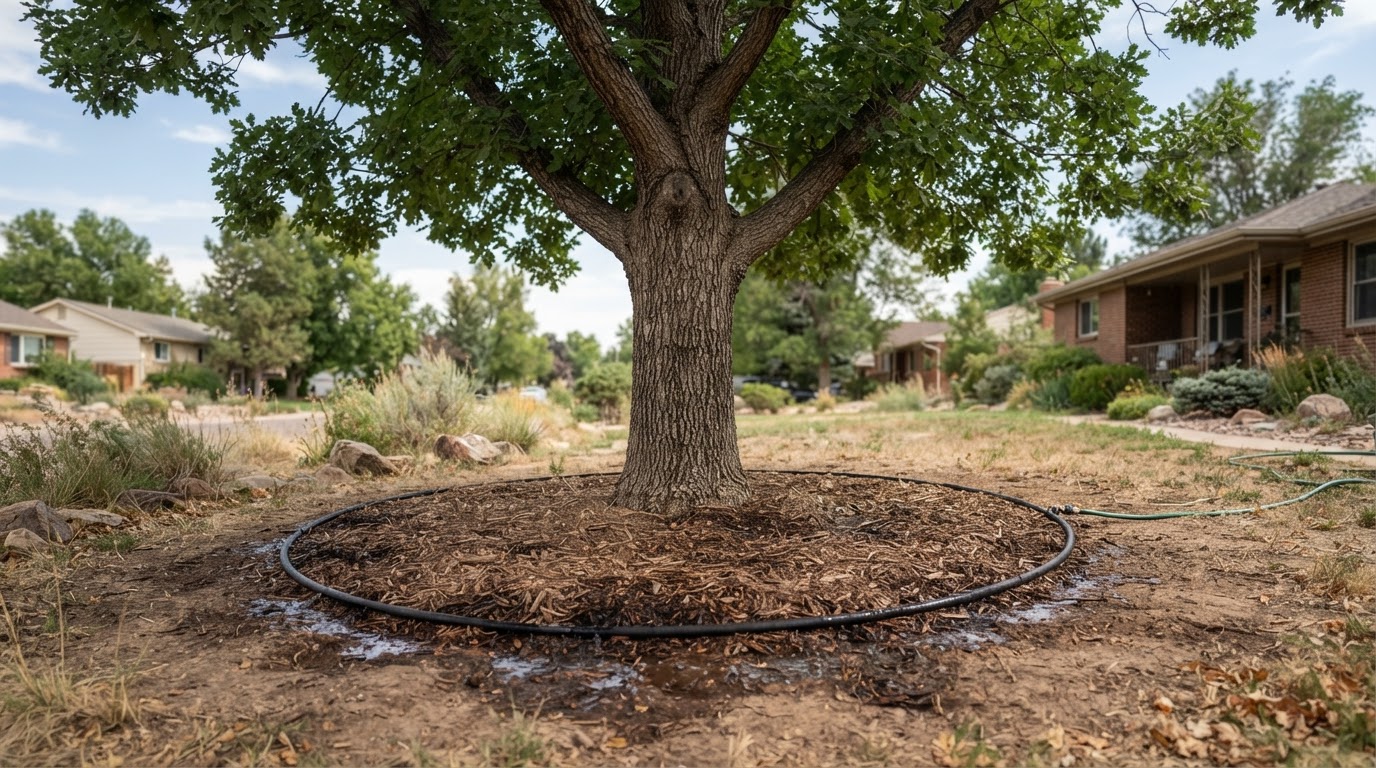
For established trees, water should generally be distributed through the root zone rather than poured directly against the trunk. Focus on:
- the area beneath the canopy
- the drip line
- the broader root zone
For larger trees, roots may extend well beyond the canopy edge. Use slow application so the water has time to soak into the soil. Possible methods include:
- soaker hose
- slow-running garden hose
- drip irrigation
- soft spray wand
Do not repeatedly saturate the base of the trunk.
Which Trees Need Winter Water the Most?
Newly Planted Trees
New trees have limited root systems and are often more vulnerable to dry winter soil while they become established.
Evergreens
Pine, spruce, fir, arborvitae, and other evergreens continue losing moisture through foliage during winter and may show winter desiccation when soil moisture is too low.
Trees Planted in the Last Few Years
Recently established trees may not yet have root systems large enough to access moisture far beyond the original planting area.
Trees Exposed to Wind
Wind increases moisture loss and can dry foliage and soil more quickly.
Trees in South or West Exposures
Sunny exposures may warm and dry soil more quickly during winter.
Trees Already Under Stress
Trees affected by drought, root damage, construction, or poor growing conditions may be less tolerant of additional water stress.
Do Evergreen Trees Need More Winter Water?
Evergreens deserve special attention during dry Colorado winters. Unlike deciduous trees, evergreens retain foliage throughout the winter. That foliage continues to lose moisture.
When roots cannot replace enough of that moisture because the soil is dry or frozen, foliage can become damaged. Possible symptoms include:
- brown needle tips
- browning on exposed sides of the tree
- needle discoloration
- dry foliage
- dieback
These symptoms can also have other causes, so winter browning alone does not prove drought stress.
Can You Water Trees When the Ground Is Frozen?
No. Watering frozen soil is usually ineffective because the water cannot soak into the active root zone properly. Wait for a warmer period when:
- temperatures rise above 40 degrees Fahrenheit
- the soil surface has thawed
- water can infiltrate rather than run off
Colorado often has warm winter days between cold periods, and those are generally the better opportunities for supplemental watering.
Should You Water Trees if There Is Snow on the Ground?
Usually not while the ground is covered by snow. Snow can contribute useful moisture as it melts.
If meaningful snow cover is present, supplemental irrigation may not be necessary. After the snow melts, check soil conditions before deciding whether additional water is needed.
The goal is to respond to actual moisture conditions, not follow a rigid schedule.
What Is Winter Desiccation?
Winter desiccation occurs when a tree loses moisture faster than its roots can replace it. This can happen when:
- the soil is dry
- the soil is frozen
- winter winds increase moisture loss
- sun warms exposed foliage
- evergreen needles continue losing water
Symptoms often become noticeable in late winter or spring. Evergreens can be particularly vulnerable. Proper fall and winter watering during dry periods can help reduce this stress.
Can Too Much Winter Water Hurt a Tree?
Yes. Trees still need oxygen in the soil. Soil that remains saturated can stress roots and contribute to root problems.
Do not assume winter watering means keeping the soil constantly wet. Water only when conditions are dry enough to justify it. Be especially cautious in:
- poorly drained soil
- low spots
- heavy clay
- areas where water already collects
- properties with active irrigation
Good winter watering is occasional and condition-based.
Does Mulch Help During Winter?
Yes. Mulch can help conserve soil moisture, moderate temperature swings, and reduce evaporation from the root zone. A layer of organic mulch can be useful around trees during winter.
Keep mulch away from direct contact with the trunk. Do not pile mulch against the bark. Avoid creating a mulch volcano. A broad, moderate layer over the root zone is more useful than a tall pile around the trunk.
How Can You Tell if a Tree Is Dry in Winter?
Winter moisture stress can be difficult to identify visually because many deciduous trees are dormant. Instead of relying only on the canopy, look at:
- recent weather
- snowfall
- soil moisture
- wind exposure
- site conditions
- tree age
- species
- previous drought stress
For evergreens, browning or drying foliage may indicate moisture stress, but insects, disease, salt, root problems, or other environmental damage can produce similar symptoms. If decline is significant, identify the cause before assuming watering is the only solution.
A Simple Winter Watering Checklist
- 1
Check Recent Precipitation
If Denver has received meaningful rain or snow recently, additional water may not be needed.
- 2
Wait for a Warm Day
Choose a day above 40 degrees Fahrenheit when the soil is not frozen.
- 3
Check the Soil
Confirm that the root zone is actually dry before watering.
- 4
Water Slowly
Apply water gradually so it soaks into the soil instead of running off.
- 5
Water the Root Zone
Distribute moisture beneath and around the canopy rather than concentrating it against the trunk.
- 6
Adjust for Tree Size and Condition
Newly planted trees, evergreens, stressed trees, and exposed sites may deserve closer attention.
Denver Winter Tree Care
How Tree Pros Evaluates Winter Stress
Tree Pros has served the Denver metro since 2003, and founder Paul Goin has worked professionally in tree care since 1981. Our team includes three ISA Certified Arborists, and every crew leader is an ISA Certified Arborist.
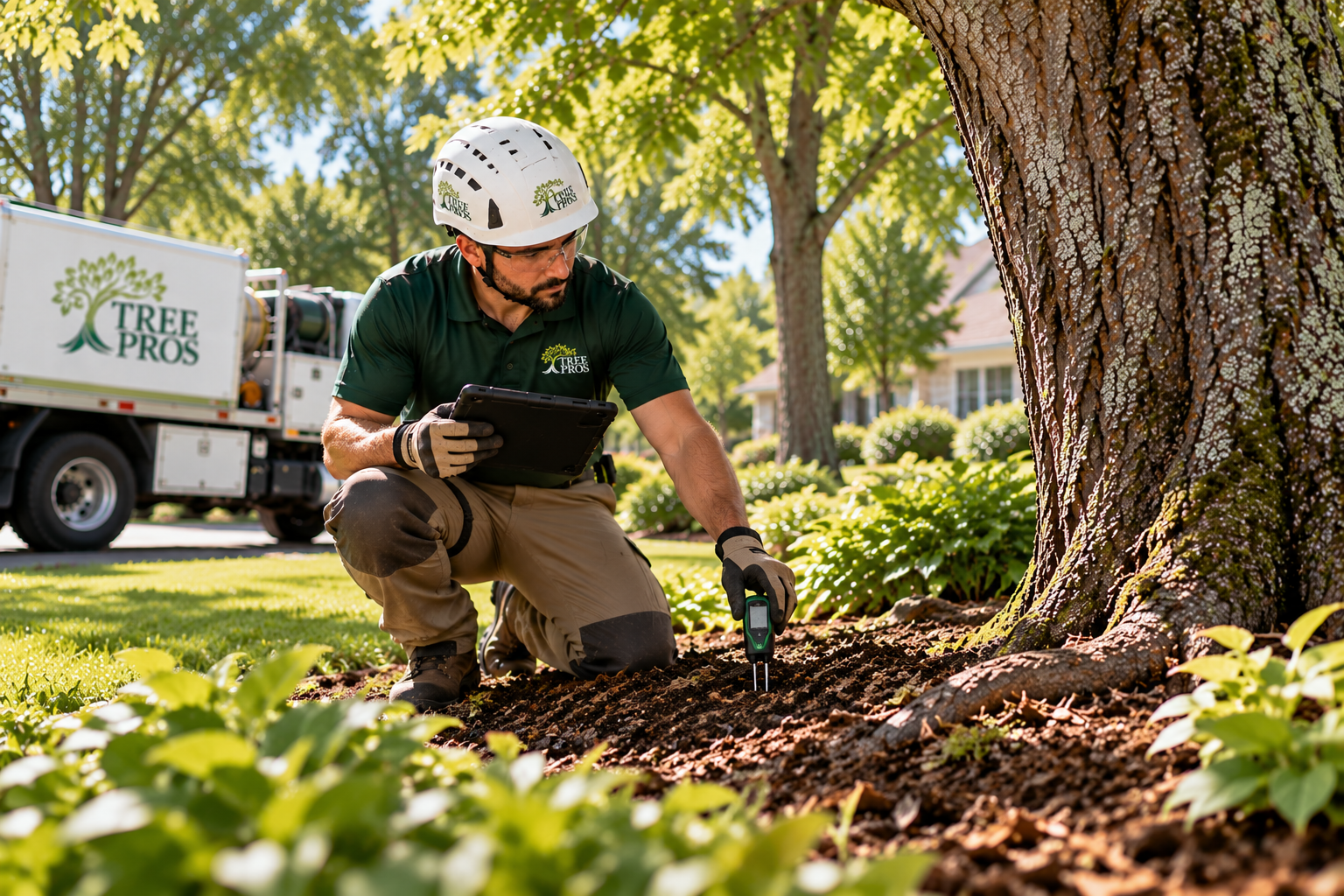
When a tree shows winter or early spring decline, we do not assume drought is the only cause. We may look at:
- tree species
- soil moisture
- root condition
- watering history
- sun and wind exposure
- winter injury
- insect activity
- disease symptoms
- salt exposure
- construction damage
- previous drought stress
- site conditions
The goal is to identify what is actually causing the problem before recommending what to do next. A recommendation should fit the tree, not the service list.