Arborist-Led Tree Health Care
Tree Disease Treatment in Denver, CO
Spots on leaves, dying branches, discoloration, or a thinning canopy can make it look like a tree has a disease.
Sometimes it does. Sometimes something else is causing the symptoms.
Tree Pros evaluates the tree before recommending treatment. Our tree health work is guided by ISA Certified Arborists and Board Certified Master Arborist leadership, with recommendations based on the tree, the symptoms, and the conditions around it.
- Serving Denver Since 2003
- 3 ISA Certified Arborists
- Every Crew Leader ISA Certified
- Board Certified Master Arborist Led
What Are You Seeing?
Tree Disease Can Show Up in Different Ways
Tree disease symptoms vary by species, pathogen, season, and the overall condition of the tree. A symptom alone does not always identify the cause. If something about your tree has changed, tell us what you are seeing.
Leaf Spots or Discoloration
Unusual spots, blotches, yellowing, browning, or other color changes may be associated with disease, but environmental stress and other problems can produce similar symptoms.
Branch Dieback
Branches dying from the tips inward or sections of canopy decline may be related to disease, insects, root problems, drought, previous damage, or multiple stresses.
Cankers or Bark Changes
Sunken, cracked, discolored, or abnormal areas of bark can be important clues when evaluating a tree health problem.
Thinning Canopy
A canopy that becomes noticeably thinner can indicate declining tree health, but the underlying cause should be investigated before treatment is recommended.
Premature Leaf Drop
Leaves falling earlier than expected can sometimes be associated with disease or stress. Timing, species, weather, and other symptoms help provide context.
Unusual Growth
Abnormal growth on leaves, twigs, branches, or stems may deserve closer evaluation, especially when it appears alongside other signs of decline.
Repeated Problems
Symptoms that return year after year may point to an ongoing health problem or recurring environmental condition that should be evaluated.
General Tree Decline
Sometimes a tree simply looks less healthy than it used to. When there is no obvious explanation, an arborist evaluation is a good place to start.
The Symptom Is Not Always the Cause
A Sick-Looking Tree Does Not Automatically Have a Disease
That is why Tree Pros does not begin by assuming a disease treatment is necessary.
We start with the tree.
We look at visible symptoms, species, overall condition, site factors, environmental stress, and other relevant clues before recommending what should happen next.
Sometimes disease treatment makes sense.
Sometimes the tree needs something completely different.
When decline is the concern, it can help to review how to tell if a tree is dead or dying and understand what an arborist evaluates.
Similar Symptoms, Different Problems
Disease and Insect Damage Can Look Similar From the Ground
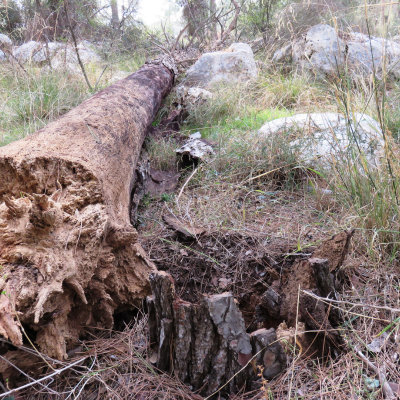
Canopy thinning, leaf discoloration, dieback, and declining branches can sometimes be associated with disease.
They can also result from damaging insects.
In other cases, insects may be present on a tree without being the primary cause of decline.
Identification matters because disease management and insect management are not interchangeable.
Tree Pros evaluates what is happening before recommending treatment.
It May Not Be a Disease
Denver Growing Conditions Can Produce Disease-Like Symptoms
Trees in the Denver metro grow under challenging conditions.
Conditions that can affect tree health
Those stresses can sometimes create symptoms that resemble disease.
They can also weaken a tree and make other health problems more significant.
Understanding the site is part of understanding the tree.
That is why Tree Pros looks beyond the leaves before recommending treatment.
Tree Health Problems in Denver
Disease Problems Depend on the Tree, Symptoms, and Conditions
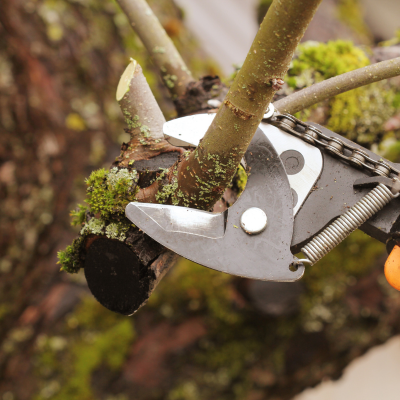
Denver-area trees can experience a range of disease problems affecting foliage, branches, bark, stems, and other tissues. These categories can help you recognize the kind of problem you are seeing, but they are not a substitute for an arborist evaluation.
Leaf and Foliage Problems
Spots, discoloration, browning, abnormal leaf development, or premature leaf loss can sometimes be associated with foliar disease. Weather, irrigation, environmental stress, and other conditions can produce similar symptoms, so identification matters.
Branch and Twig Dieback
Disease can sometimes contribute to dying twigs or branches, but insects, drought, root stress, storm damage, and other problems should also be considered.
Cankers and Bark Problems
Diseased or damaged areas of bark and woody tissue may appear sunken, cracked, discolored, or otherwise different from surrounding tissue. Their significance depends on the cause, location, extent, and condition of the tree.
Root and Vascular Problems
Some tree health problems interfere with roots or the movement of water and nutrients through the tree. Symptoms may become visible in the canopy even when the underlying problem is elsewhere. Do not diagnose a specific root or vascular disease from generic visible symptoms alone.
Preservation When It Makes Sense
Disease Does Not Automatically Mean Tree Removal
- Some tree disease problems can be managed.
- Others may be monitored.
- Some trees may recover when contributing stresses are addressed.
- In other situations, the disease or overall decline may be too advanced for treatment to be a reasonable option.
Tree Pros considers the tree's species, overall condition, structure, severity of symptoms, surrounding property, and realistic management options before recommending what should happen next.
The goal is not to keep every tree at any cost.
It is also not to remove every tree that shows signs of disease.
The recommendation should fit the tree.
Care Based on the Diagnosis
Treatment Should Match the Actual Problem
There is no single treatment for "tree disease." Different diseases affect different trees in different ways.
- Timing can matter.
- Tree condition matters.
- The severity of the problem matters.
- Environmental conditions matter.
- The realistic benefit of treatment matters.
When Tree Pros recommends disease management, the recommendation should be based on the identified or reasonably supported problem and the condition of the tree.
Looking at the Whole Tree
Disease Treatment May Be Only One Part of the Recommendation
A tree can be dealing with disease and environmental stress at the same time.
That means treatment alone may not address everything affecting the tree.
Depending on what we find, the recommendation may also involve pruning, insect management, fertilization when appropriate, changes in tree care, monitoring, or another Plant Health Care strategy.
The purpose is to address the tree as a whole rather than treating one symptom in isolation.
What to Expect
How Tree Disease Care Works With Tree Pros
Tell Us What You Are Seeing
Let us know about discoloration, spots, dieback, leaf loss, bark changes, declining branches, or other changes you have noticed.
We Evaluate the Tree
We look at the symptoms, tree species, overall condition, site factors, environmental stresses, and other relevant clues.
We Consider the Likely Cause
The goal is to distinguish disease from insect damage, environmental stress, structural problems, or other possible causes before recommending treatment.
You Get a Clear Recommendation
We explain what we find and whether disease management, Plant Health Care, pruning, insect control, monitoring, removal, or another approach makes sense.
Recommended Care Is Completed
If you approve the proposed work, Tree Pros carries out the recommended tree care and explains any relevant next steps.
Experience You Can Verify
Tree Health Decisions Guided by Certified Arborists
Tree health problems are rarely helped by guessing.
Tree Pros founder Paul Goin began professional tree care in Golden, Colorado, in 1981.
He became an ISA Certified Arborist in 1988 and founded Tree Pros in Denver in 2003.
Paul earned the ISA Board Certified Master Arborist credential in 2015 and graduated from the American Society of Consulting Arborists Academy in 2018.
He also holds ISA Tree Risk Assessment Qualification, ASCA Tree and Plant Appraisal Qualification, and a Colorado Department of Agriculture Qualified Supervisor credential.
Tree Pros has three ISA Certified Arborists on staff, and every crew leader is an ISA Certified Arborist.
That depth of experience helps us evaluate the tree before deciding whether disease treatment is actually the right next step.
- Professional tree care experience dating to 1981
- Tree Pros founded in Denver in 2003
- 3 ISA Certified Arborists
- Every crew leader ISA Certified
- Board Certified Master Arborist leadership
- ISA TRAQ
- ASCA Academy Graduate
- ASCA TPAQ
- Colorado Department of Agriculture Qualified Supervisor
Customer Reviews
What Customers Say About Tree Pros
"Paul is knowledgeable and helpful - we had him come out to assess our trees health as well as help with an issue we were having with rust on one of our trees - highly recommend!"
Deirdre Frank
Google Review
"I've got a tree with damage that is dying. I contacted Paul at Tree Pros and he gave me quite a lot of advice that I'm hoping will have an impact in saving the tree. I appreciated his detailed advice (it's great when a person can get this kind of info from an expert) and I have my fingers crossed!"
Ryan Patterson
Google Review
"Tree Pros recently checked my trees and gave me excellent advice on those that were struggling a bit, and which ones that were doing just fine. The young man knew what he was talking about...I will use again in the future. Highly recommended!"
Bart Carpenter
Google Review
"Great. Knowledgeable. Friendly. Looking forward to our project!"
Tamara Brady
Google Review
"Paul and Greg and Tree Pros are excellent at tree trimming. They are certified arborists, which means they will trim your tree in a way to keep it healthy and looking nice. They just don’t hack off limbs without concern for health or looks. Highly recommend them for a healthy tree trimming!"
Dan Pastula
Google Review
Related Tree Health Services
Tree Health Problems Often Overlap
Plant Health Care
Whole-tree care that looks at symptoms, site conditions, and likely causes.
Learn MoreTree Insect Control
Insect management based on the pest, the tree, and the timing.
Learn MoreTree Fertilization
Nutrient and soil-focused care when the tree and conditions call for it.
Learn MoreCertified Arborist Services
Arborist evaluations that identify what is actually affecting your tree.
Learn MoreTree Trimming & Pruning
Selective pruning as part of a larger tree care plan.
Learn MoreTree Removal
Careful removal when a tree cannot reasonably be preserved.
Learn MoreServing the Denver Metro
Tree Disease Care Across the Denver Metro
Tree Pros provides arborist-led tree health evaluations and disease care throughout Denver and surrounding communities.
Tree Disease Questions
Frequently Asked Questions About Tree Disease in Denver
Does Your Tree Look Unhealthy?
Find Out What Is Happening Before Treating It
Tell us what you are seeing. Tree Pros will evaluate the tree, explain what may be causing the symptoms, and help you determine the appropriate next step.
Serving Denver since 2003. ISA Certified Arborists. BCMA Led. Call 303-791-3740.