How Much Water Does a Tree Need?
A useful starting point during dry conditions is to estimate water based on trunk diameter. Colorado State University recommends approximately:
10 gallons of water per week for each inch of trunk diameter for trees growing without lawn irrigation during drought conditions.
Examples by trunk size:
- 1-inch trunk: About 10 gallons
- 2-inch trunk: About 20 gallons
- 3-inch trunk: About 30 gallons
- 4-inch trunk: About 40 gallons
These numbers are guidelines, not automatic prescriptions. Actual needs change based on:
- tree size
- tree age
- species
- soil type
- temperature
- wind
- sun exposure
- recent rainfall or snow
- existing irrigation
- root condition
- whether the tree is newly planted
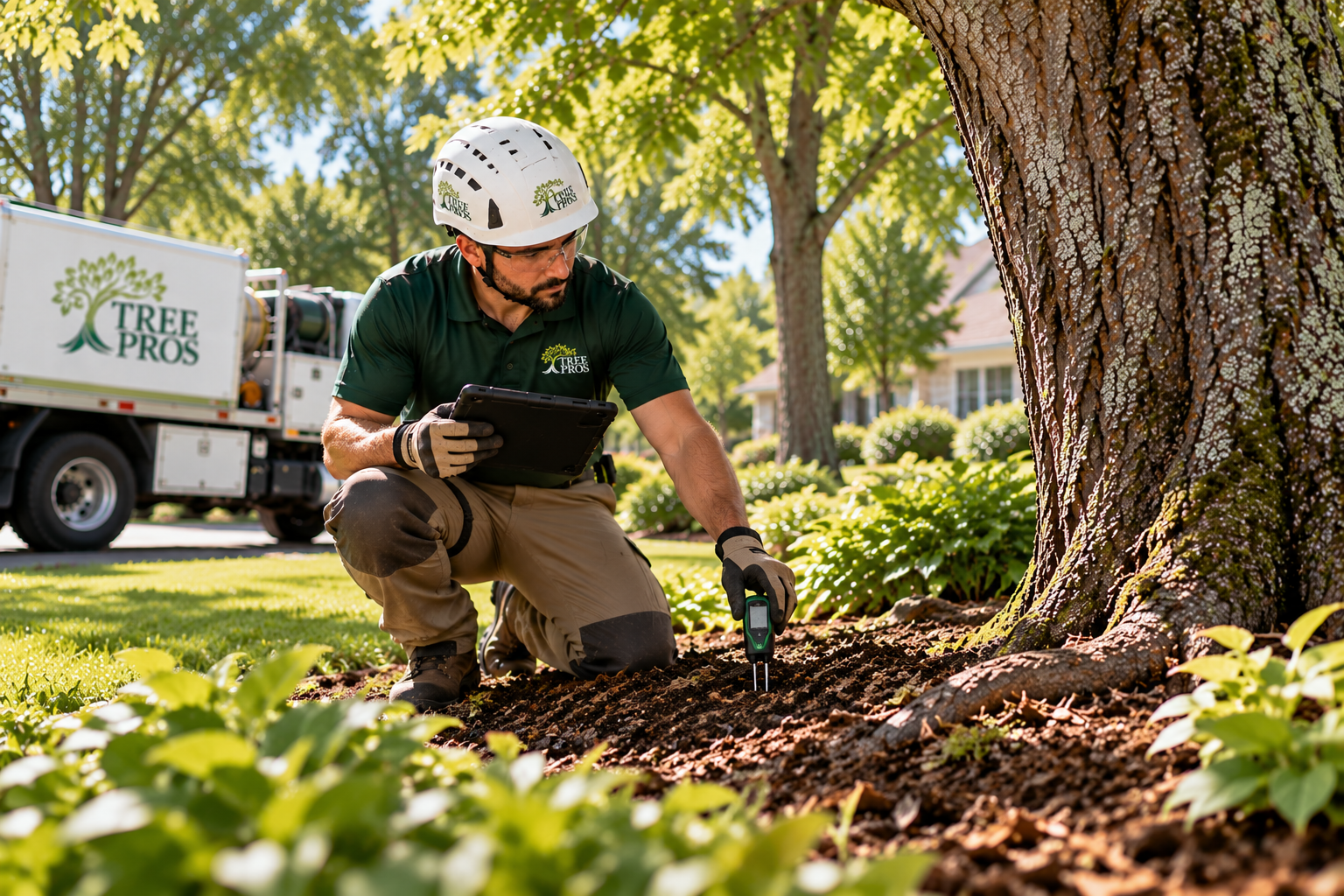
Before adding water, check whether the soil is already moist. Colorado soils can hold water for long periods, especially where clay is present.
Where Should You Water a Tree?
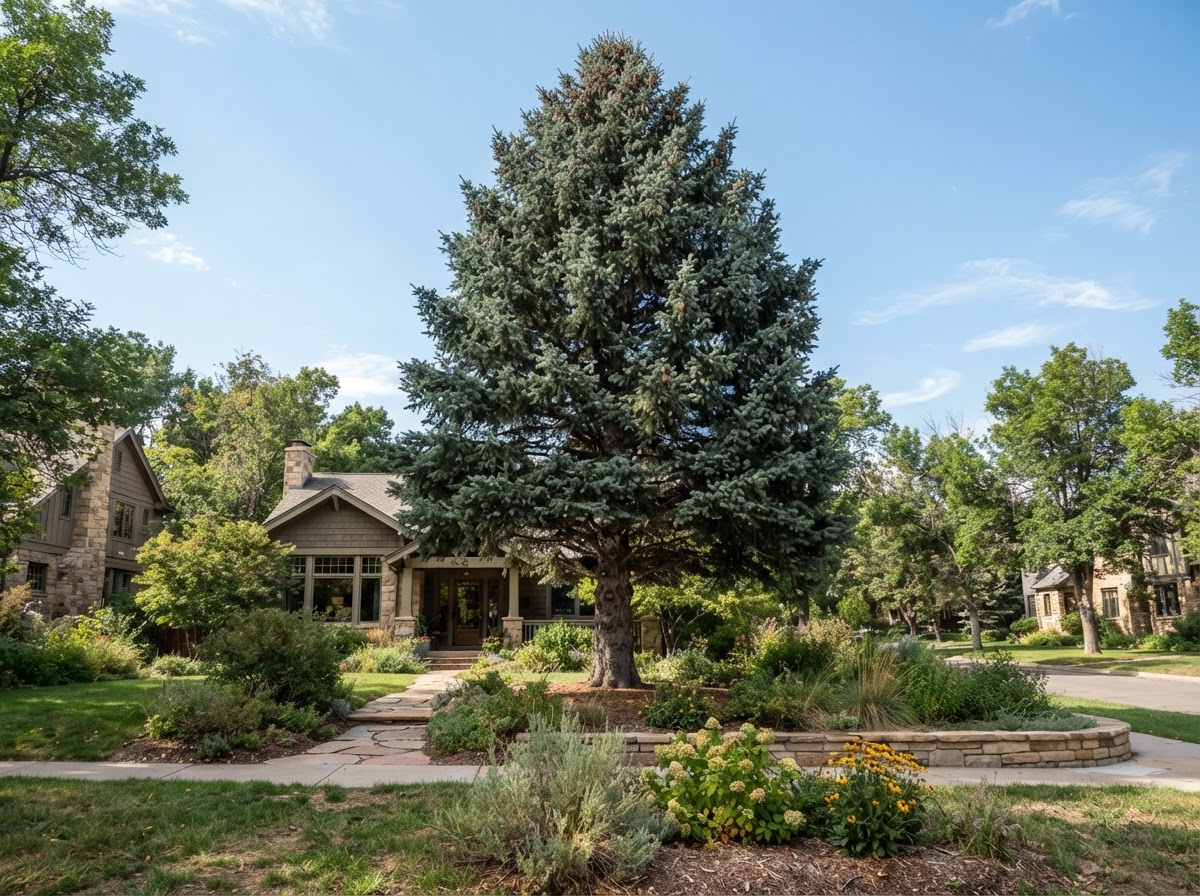
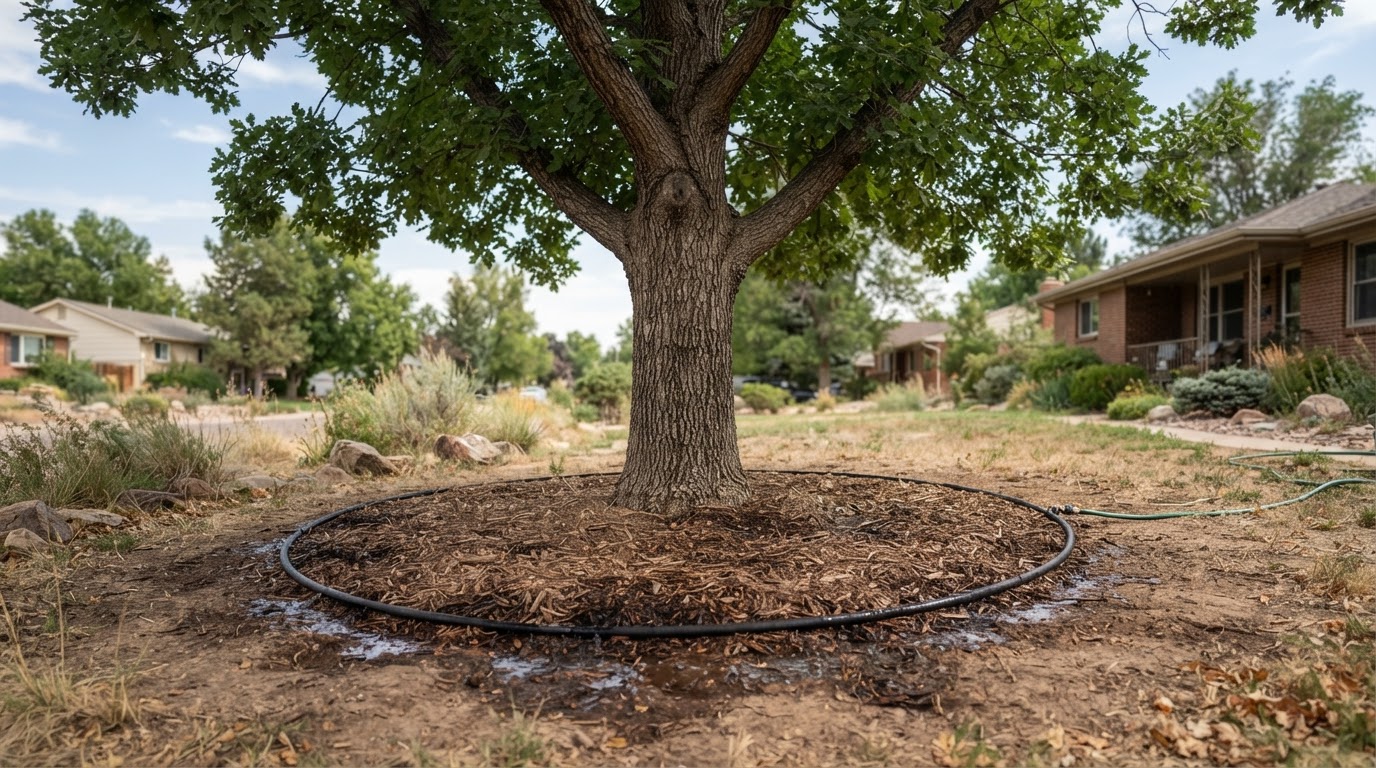
For established trees, watering should generally focus on the root zone rather than directly against the trunk. Denver Water recommends applying water within the drip line and critical root zone.
The drip line is the area beneath and around the outer edge of the tree's canopy. That is where many of the active water-absorbing roots are located. For larger established trees, roots may extend well beyond the canopy.
Avoid repeatedly soaking the base of the trunk. The goal is to distribute moisture across the root zone.
Where water should go:
How Deep Should You Water a Tree?
Slow, deep watering is generally more useful than frequent shallow watering. Denver Water recommends applying water so the soil is moistened to approximately 12 inches deep through the critical root zone.
Colorado State University also notes that many water-absorbing roots are concentrated in the upper portion of the soil. The goal is to allow water to soak into that root zone rather than running across the surface.
Possible watering methods include:
- soaker hose
- slow-running garden hose
- soft spray wand
- drip irrigation
- watering bag for appropriate young trees
- deep-root watering equipment used correctly
If using a deep-root fork or needle, Denver Water advises inserting it no deeper than about 8 inches. Do not imply that tree roots need water several feet underground.
How Often Should You Water Trees in Denver?
Watering frequency depends on the size of the tree, precipitation, soil moisture, and whether the tree receives irrigation from surrounding landscaping. Denver Water's current guidance for dry conditions provides a useful reference.
Small Trees
Small trees may require watering more frequently because their root systems occupy a smaller soil volume. Denver Water recommends approximately weekly watering for small trees during dry growing-season conditions.
Medium Trees
Medium trees may need deep watering several times per month depending on weather, soil moisture, and irrigation.
Large Trees
Large established trees generally need less frequent but larger-volume watering. Denver Water recommends roughly twice-monthly watering for larger trees during dry conditions, with the amount adjusted for trunk diameter.
These frequencies should be adjusted when meaningful rainfall, snow, lawn irrigation, or existing soil moisture is already supplying water. Do not water simply because the calendar says it is watering day.
Do Trees in Irrigated Lawns Need Extra Water?
Sometimes, but not always. Denver Water notes that trees growing in properly irrigated turf areas may not need additional watering during years with normal precipitation.
But lawn irrigation and tree watering are not automatically the same thing. Grass has a shallower root system and is often watered more frequently and less deeply. A mature tree may need moisture deeper and across a much larger area.
Trees may still need supplemental water when:
- watering restrictions reduce turf irrigation
- the tree's root zone extends beyond irrigated turf
- the lawn irrigation is shallow
- the tree is newly planted
- the tree is drought stressed
- soil conditions limit water movement
- part of the root zone is covered by pavement or construction
The soil should be checked before additional irrigation is added.
How Much Water Do Newly Planted Trees Need?
Newly planted trees generally need more frequent attention than established trees because their root systems have not yet expanded into the surrounding soil. Colorado State University identifies newly planted trees as a high watering priority during drought.
Tree establishment takes time. CSU notes that establishment in Colorado can take roughly one year for each inch of trunk diameter. During that period, the root ball and surrounding soil should be monitored regularly.
New trees may need:
- more frequent watering
- smaller individual watering zones initially
- gradual expansion of the watered area as roots grow
- careful soil-moisture monitoring
- mulch to reduce evaporation
Avoid assuming that irrigation near the trunk will continue to be adequate as the tree grows. As roots expand, the watering area should expand too.
Can You Overwater a Tree?
Yes. More water is not always better. Tree roots need both water and oxygen. When soil remains saturated for too long, oxygen levels can drop and roots can become stressed or damaged.
Possible signs of excessive moisture may include:
- persistently saturated soil
- water pooling around the root zone
- poor growth
- yellowing foliage
- root or trunk problems
- decline in areas with poor drainage
These symptoms are not proof of overwatering because several tree problems can look similar. Check the soil and growing conditions before assuming more water is needed.
What Are Signs a Tree May Need More Water?
Drought stress can appear differently depending on the tree species and time of year. Possible signs include:
- wilting foliage
- curling leaves
- scorched leaf edges
- premature leaf drop
- small or sparse leaves
- canopy thinning
- branch dieback
- reduced growth
- dry soil through the root zone
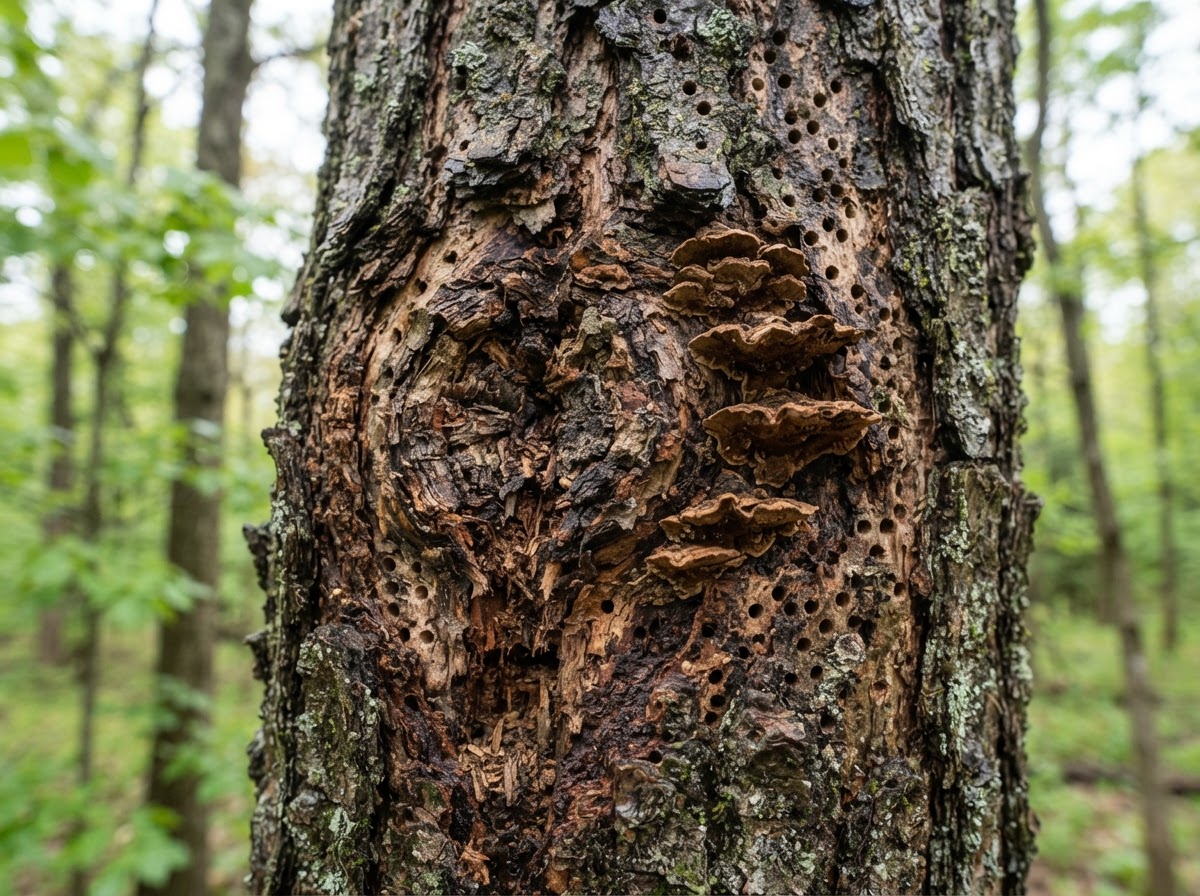
However, these symptoms can also be associated with root damage, insects, disease, soil problems, or other stress. Watering should not be used as a substitute for diagnosis when decline is significant or persistent.
Why Drought Stress Matters for Denver Trees
Drought does more than make leaves wilt. Long-term water stress can reduce a tree's ability to grow, maintain roots, defend itself, and recover from injury. Colorado State University notes that water-stressed trees may become more vulnerable to insects, disease, and branch dieback.
That is particularly important in Denver because trees may experience:
- extended dry periods
- high winds
- intense sun
- limited soil volume
- compacted urban soils
- competition with turf
- heat reflected from pavement and buildings
A tree can be under water stress before dramatic symptoms become obvious.
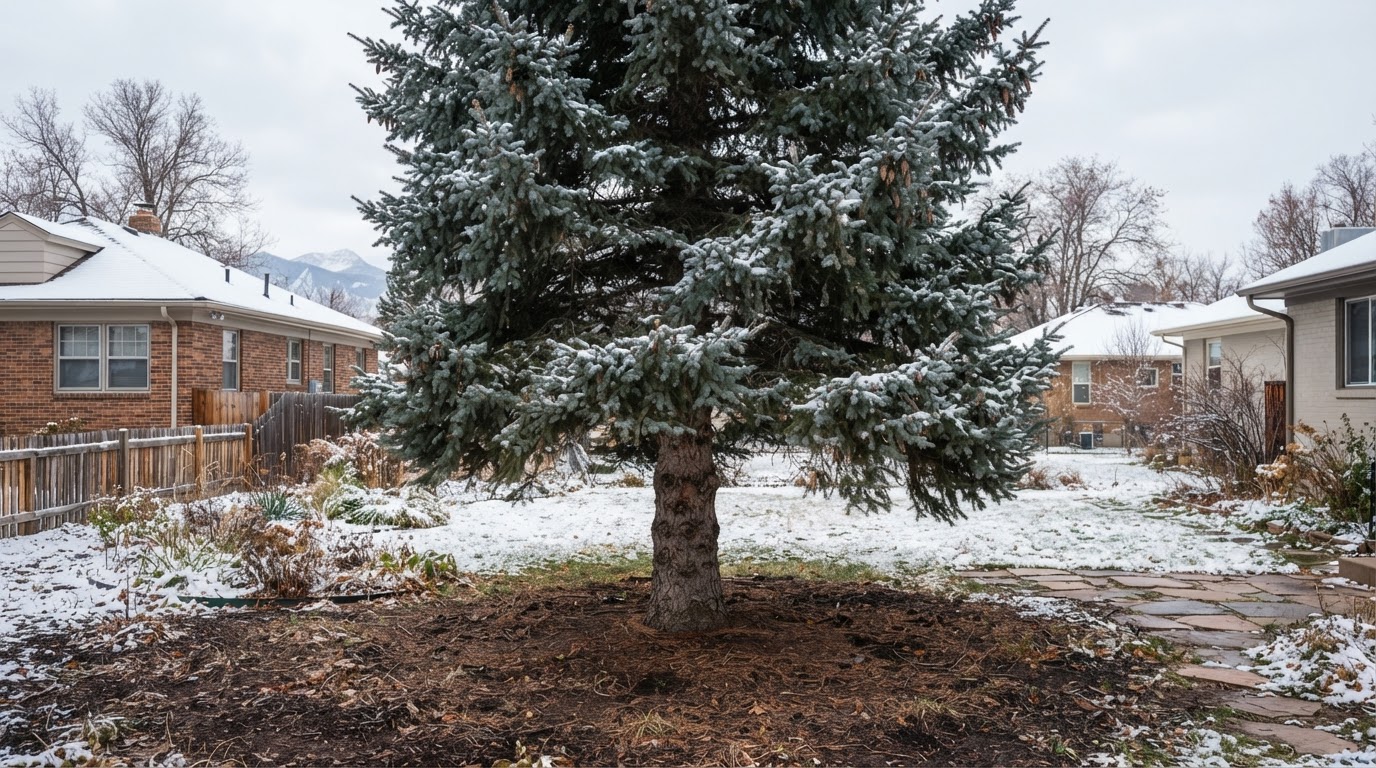
Should You Water Trees in Winter in Denver?
Yes, during prolonged dry periods. Winter watering is an important part of Colorado tree care. Denver Water and Colorado State University both recommend supplemental winter watering when conditions are dry.
Water only when:
- air temperatures are above 40 degrees Fahrenheit
- the ground is not frozen
- there is no snow covering the soil
- conditions are dry enough to justify supplemental water
Apply water during the middle of the day so it has time to soak into the soil before temperatures fall overnight. Denver Water recommends about 10 gallons per inch of trunk diameter during extended dry winter periods. In a winter with regular wet snow, additional watering may not be necessary.
How Long Without Rain or Snow Is Too Long?
There is no perfect number because soil type, temperature, wind, tree size, and existing irrigation all matter. For winter conditions, Denver Water recommends paying attention when there has been no meaningful precipitation for roughly three weeks.
That is a useful signal to check soil moisture and consider supplemental watering. During hot summer conditions, trees may dry much faster. Instead of relying only on a calendar, check:
- recent precipitation
- soil moisture
- weather
- wind
- tree condition
- irrigation coverage
The goal is to respond to actual soil conditions.
Does Mulch Help Trees Use Water More Efficiently?
Yes. Mulch can reduce evaporation, moderate soil temperature, and help conserve moisture around the root zone. Denver Water recommends approximately 3 to 4 inches of organic mulch.
Good mulch materials can include:
- wood chips
- bark
- leaves
- evergreen needles
Keep mulch away from direct contact with the trunk. Do not pile mulch against the base of the tree. A deep "mulch volcano" can trap moisture against trunk tissue and create additional tree health problems.
A Simple Denver Tree Watering Checklist
- 1
Check the Weather
Consider recent rain, snow, heat, wind, and drought conditions.
- 2
Check the Soil
Do not assume the tree is dry just because the surface looks dry.
- 3
Water the Root Zone
Focus on the drip line and surrounding root area rather than pouring all the water against the trunk.
- 4
Water Slowly
Allow water to soak into the soil instead of running into the street or gutter.
- 5
Adjust for Tree Size
Larger trees generally require more total water but may need it less frequently.
- 6
Recheck Conditions
Weather and soil moisture change throughout the year, so watering should change too.
Tree Health Starts Below Ground
How Tree Pros Looks at Water Stress
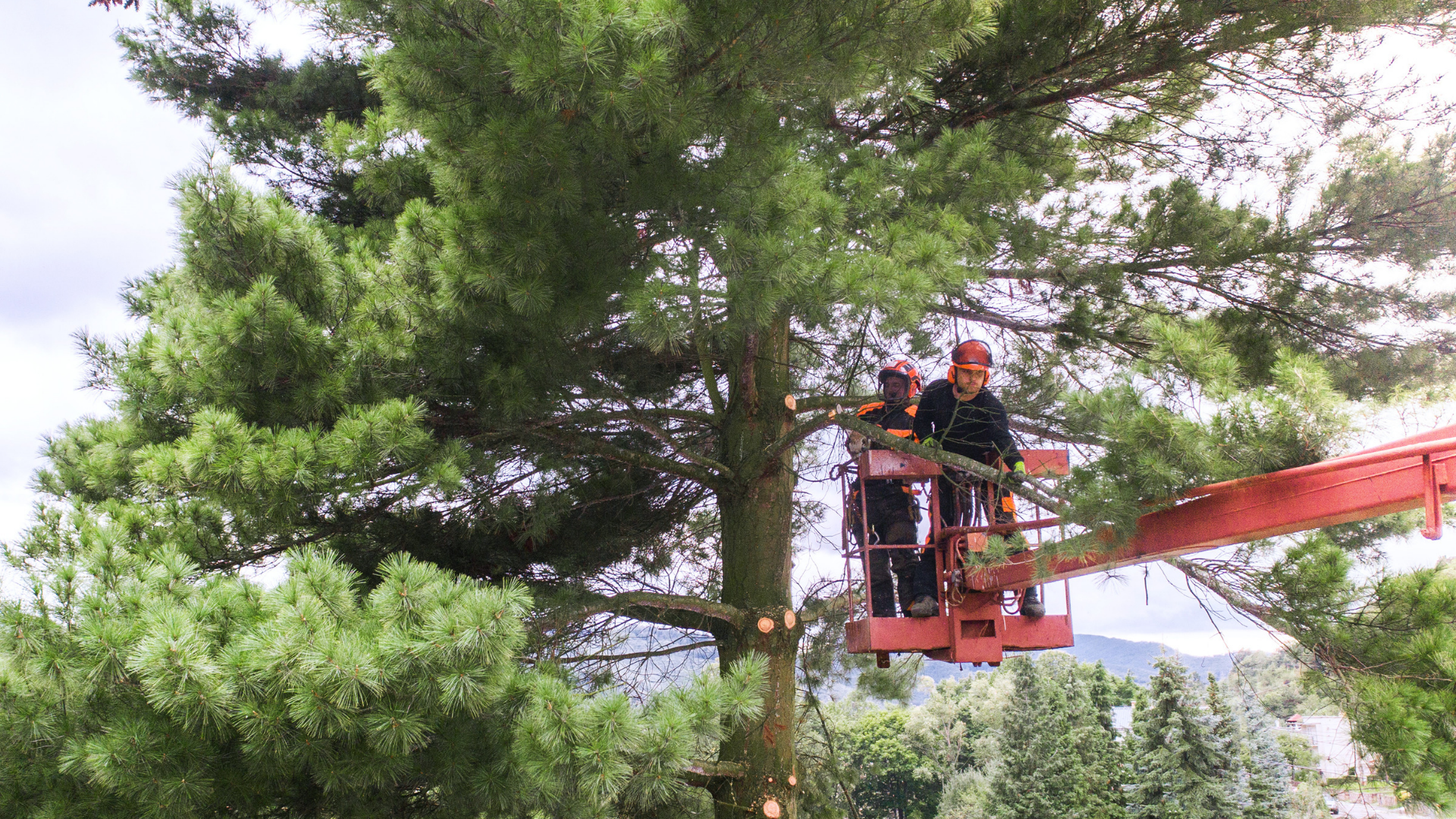
Tree Pros has served the Denver metro since 2003, and founder Paul Goin has worked professionally in tree care since 1981. Our team includes three ISA Certified Arborists, and every crew leader is an ISA Certified Arborist.
When a tree begins thinning, dropping leaves, losing branches, or declining, watering is one of the factors we consider. But it is rarely the only one. We may also look at:
- tree species
- soil moisture
- root condition
- soil compaction
- irrigation patterns
- recent construction
- drought
- insects
- disease
- storm damage
- previous pruning
- site conditions
The goal is to identify why the tree is stressed before recommending what to do next. A recommendation should fit the tree, not the service list.