
Arborist-Led Tree Insect Care
Tree Insect Control in Denver, CO
Seeing insects on a tree does not automatically mean the tree needs treatment.
The first step is figuring out what is actually happening.
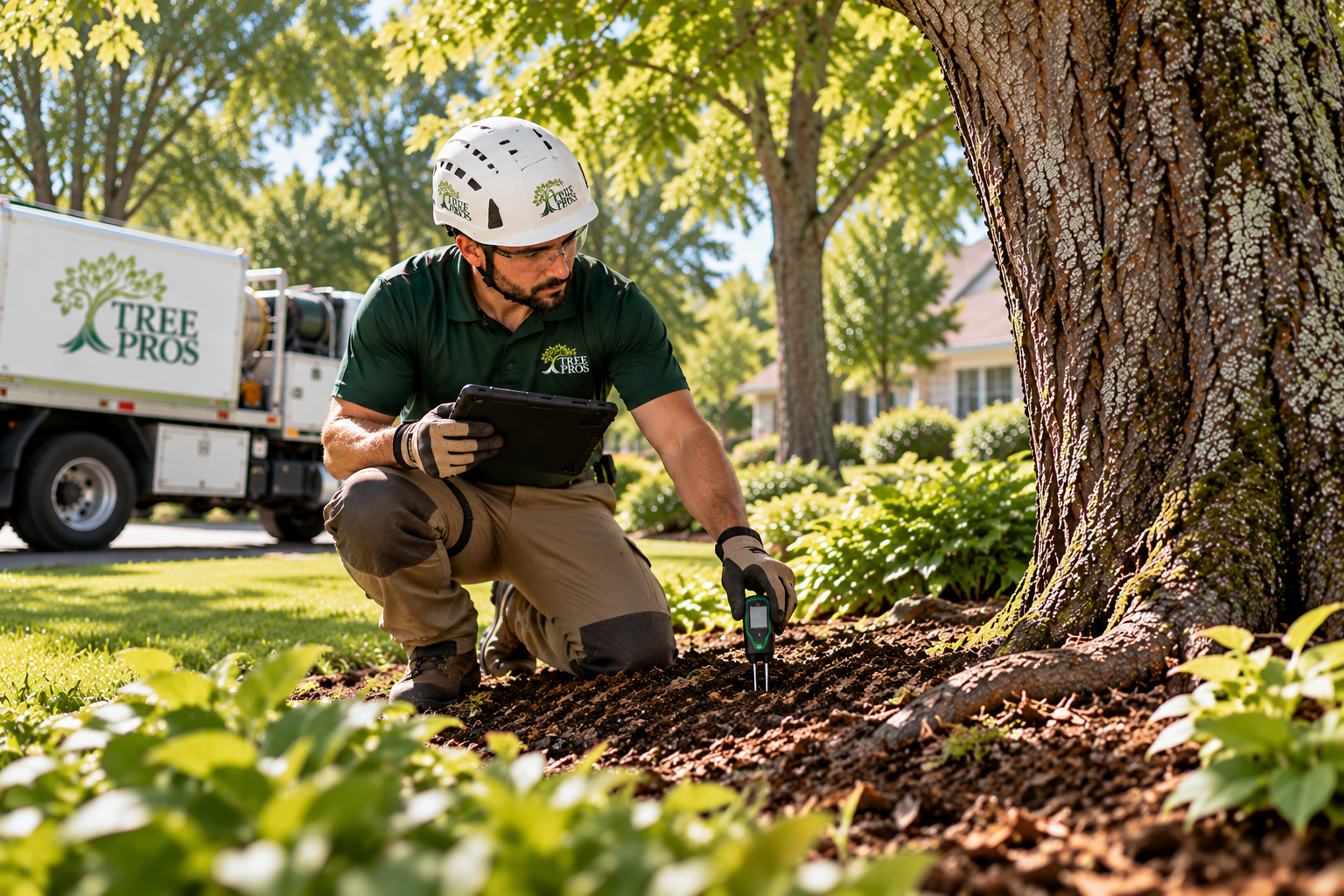
Tree Pros evaluates insect activity, visible damage, tree species, overall health, and surrounding conditions before recommending treatment. Our tree health work is guided by ISA Certified Arborists and Board Certified Master Arborist leadership, with experience responding to insect problems affecting Denver-area trees.
- Serving Denver Since 2003
- 3 ISA Certified Arborists
- Every Crew Leader ISA Certified
- Board Certified Master Arborist Led
What Are You Seeing?
Possible Signs Insects Are Affecting a Tree
Different insects affect trees in different ways. Some feed on foliage. Others affect bark, branches, stems, or other tissues. And some insects you see on a tree may not be causing meaningful damage at all. You do not need to identify the insect yourself. Tell us what you are seeing.
Small Holes in the Bark
Exit holes or other openings in bark can sometimes be associated with wood-boring insects. Their size, shape, location, tree species, and surrounding symptoms can help with identification.
Thinning Canopy
A canopy that becomes noticeably thinner can be associated with insect damage, but disease, drought, root problems, and other stresses can cause similar decline.
Dying Branches
Branch dieback may occur with some insect problems, but the cause should be evaluated before assuming insects are responsible.
Unusual Bark Activity
Changes in bark, loose material, galleries beneath bark, or other unusual signs may deserve closer inspection when a tree is also declining.
Damaged or Discolored Leaves
Chewed, distorted, discolored, or otherwise damaged foliage can sometimes result from insect feeding, although disease and environmental stress may create similar symptoms.
Visible Insects
Seeing insects is useful information, but their presence alone does not prove they are damaging the tree. Identification matters.
Sudden Tree Decline
A noticeable change in canopy density, branch condition, or overall vigor can be a reason to evaluate the tree for insects and other possible stresses.
Something Just Looks Different
If the tree has changed and you are not sure why, start with an arborist evaluation rather than guessing at a treatment.
Know What You Are Treating
Not Every Insect on a Tree Is a Pest
What insects on a tree can mean
That is why Tree Pros does not recommend insect control simply because someone found a bug on a tree.
We look at the insect or signs of insect activity, tree species, visible damage, overall tree condition, timing, and other stresses before recommending what should happen next.
Treat the problem, not the assumption.
A Major Ash Tree Concern
Emerald Ash Borer Requires the Right Tree and the Right Diagnosis
Emerald Ash Borer is an invasive insect associated with ash trees and is an important concern for ash tree owners along the Front Range.
Tree Pros has experience responding to the Emerald Ash Borer outbreak.
If you have an ash tree and are concerned about canopy decline, branch dieback, bark changes, or possible insect activity, the first step is to evaluate the tree.
- The condition of the ash matters.
- Its species matters.
- The extent of decline matters.
- Its location and value to the property matter.
Treatment decisions should be based on the individual tree rather than assuming every ash tree should receive the same recommendation. For a detailed overview, read about emerald ash borer in Denver.
Conifer Health
IPS Beetles Can Be Part of a Larger Tree Stress Problem
Tree Pros has experience responding to IPS beetle outbreaks affecting Colorado trees.
When bark beetle activity is suspected, the condition of the tree and the stresses affecting it are important parts of the evaluation.
Trees dealing with drought, environmental stress, previous damage, or other health problems may have a different overall health picture than vigorous trees.
Tree Pros evaluates the tree before recommending what should happen next.
Similar Symptoms, Different Causes
Insect Damage and Tree Disease Can Look Similar
A thinning canopy, dying branches, discolored foliage, and general decline do not point to one cause by themselves.
Insects may be involved.
Disease may be involved.
Environmental stress may be involved.
Sometimes several problems are affecting the same tree.
That is why diagnosis matters.
Insect management and disease management are different, and the recommendation should match the problem actually affecting the tree.
Look at the Whole Tree
Tree Stress Can Be Part of the Insect Problem
Denver-area trees deal with dry periods, compacted soils, restricted rooting areas, heavy snow, wind, temperature swings, construction impacts, and other urban stresses.
Conditions that can affect tree health
When a tree is already struggling, insect activity may be only one part of the picture.
Tree Pros looks at overall tree health and growing conditions rather than treating the insect in isolation.
Depending on what we find, the recommendation may involve insect management, Plant Health Care, pruning, fertilization when appropriate, monitoring, or another approach.
Care Based on the Problem
Treatment Should Match the Insect, Tree, and Timing
There is no single treatment for "tree insects." Different insects affect different species and tissues.
- Timing can matter.
- Tree condition matters.
- The extent of damage matters.
- The realistic benefit of treatment matters.
When Tree Pros recommends insect management, the recommendation should be based on the pest involved or reasonably supported diagnosis, the condition of the tree, and appropriate arboricultural practices.
Preservation When It Makes Sense
Insect Damage Does Not Automatically Mean Tree Removal
- Sometimes treatment makes sense.
- Sometimes monitoring is appropriate.
- Sometimes other tree care is needed.
- And sometimes a severely declining tree may need to be removed.
Some insect problems can be managed when they are identified at an appropriate stage and the tree remains a reasonable candidate for care.
Other trees may already be severely compromised.
Tree Pros considers the tree species, amount of decline, structure, overall health, surrounding property, insect involved, and realistic management options before making a recommendation.
The recommendation should fit the tree.
Because insect damage and other forms of decline can look similar, it can help to review the signs a tree may be dead or dying.
What to Expect
How Tree Insect Care Works With Tree Pros
Tell Us What You Are Seeing
Let us know about insects, bark changes, holes, damaged leaves, branch dieback, canopy thinning, or other changes you have noticed.
We Evaluate the Tree
We consider tree species, visible insect activity or damage, overall condition, site factors, environmental stresses, and other relevant symptoms.
We Identify the Likely Problem
The goal is to determine whether insects are actually involved and distinguish insect damage from disease, environmental stress, or other possible causes.
You Get a Clear Recommendation
We explain what we find and whether insect management, Plant Health Care, pruning, monitoring, removal, or another approach makes sense.
Recommended Care Is Completed
If you approve the proposed work, Tree Pros carries out the recommended tree care and explains any relevant next steps.
Experience You Can Verify
Tree Insect Decisions Guided by Certified Arborists
Tree insect problems are rarely helped by guessing.
Tree Pros founder Paul Goin began professional tree care in Golden, Colorado, in 1981.
He became an ISA Certified Arborist in 1988 and founded Tree Pros in Denver in 2003.
Paul earned the ISA Board Certified Master Arborist credential in 2015 and graduated from the American Society of Consulting Arborists Academy in 2018.
He also holds ISA Tree Risk Assessment Qualification, ASCA Tree and Plant Appraisal Qualification, and a Colorado Department of Agriculture Qualified Supervisor credential.
Tree Pros has three ISA Certified Arborists on staff, and every crew leader is an ISA Certified Arborist.
Tree Pros has also worked through significant Denver-area insect problems, including IPS beetle and Emerald Ash Borer outbreaks.
That experience helps us look beyond the insect itself and evaluate the condition of the entire tree.
- Professional tree care experience dating to 1981
- Tree Pros founded in Denver in 2003
- 3 ISA Certified Arborists
- Every crew leader ISA Certified
- Board Certified Master Arborist leadership
- ISA TRAQ
- ASCA Academy Graduate
- ASCA TPAQ
- Colorado Department of Agriculture Qualified Supervisor
Customer Reviews
What Customers Say About Tree Pros
"I've got a tree with damage that is dying. I contacted Paul at Tree Pros and he gave me quite a lot of advice that I'm hoping will have an impact in saving the tree. I appreciated his detailed advice (it's great when a person can get this kind of info from an expert) and I have my fingers crossed!"
Ryan Patterson
Google Review
"Paul is knowledgeable and helpful - we had him come out to assess our trees health as well as help with an issue we were having with rust on one of our trees - highly recommend!"
Deirdre Frank
Google Review
"Tree Pros recently checked my trees and gave me excellent advice on those that were struggling a bit, and which ones that were doing just fine. The young man knew what he was talking about...I will use again in the future. Highly recommended!"
Bart Carpenter
Google Review
"Great. Knowledgeable. Friendly. Looking forward to our project!"
Tamara Brady
Google Review
"Paul and Greg and Tree Pros are excellent at tree trimming. They are certified arborists, which means they will trim your tree in a way to keep it healthy and looking nice. They just don’t hack off limbs without concern for health or looks. Highly recommend them for a healthy tree trimming!"
Dan Pastula
Google Review
Related Tree Health Services
Tree Health Problems Often Have More Than One Cause
Plant Health Care
Whole-tree care that looks at symptoms, site conditions, and likely causes.
Learn MoreTree Disease Treatment
Diagnosis-based care when disease rather than insects is the real problem.
Learn MoreTree Fertilization
Nutrient and soil-focused care when the tree and conditions call for it.
Learn MoreCertified Arborist Services
Arborist evaluations that identify what is actually affecting your tree.
Learn MoreTree Trimming & Pruning
Selective pruning as part of a larger tree care plan.
Learn MoreTree Removal
Careful removal when a tree cannot reasonably be preserved.
Learn MoreServing the Denver Metro
Tree Insect Control Across the Denver Metro
Tree Pros provides arborist-led tree insect evaluations and care throughout Denver and surrounding communities.
Tree Insect Questions
Frequently Asked Questions About Tree Insects in Denver
Seeing Insects or Tree Decline?
Find Out What Is Affecting the Tree Before Treating It
Tell us what you are seeing. Tree Pros will evaluate the tree, look for signs of insect activity and other stresses, and help you determine the appropriate next step.
Serving Denver since 2003. ISA Certified Arborists. BCMA Led. Call 303-791-3740.