What Is Emerald Ash Borer?
Emerald Ash Borer, often shortened to EAB, is a small metallic green beetle native to Asia. The adult beetle itself causes relatively little damage. The serious damage happens after eggs hatch and larvae begin feeding beneath the bark.
The larvae create winding galleries in the tissue responsible for moving water and nutrients through the tree. As more of that tissue is damaged, the canopy begins to thin and branches start to die.
According to Colorado State University Extension, heavily infested ash trees generally decline over a period of approximately two to four years after symptoms begin. EAB has already killed millions of ash trees elsewhere in North America.
For Denver-area property owners, the important point is that EAB is no longer only a problem somewhere else in the country. It is here.
Which Trees Does Emerald Ash Borer Attack?
Emerald Ash Borer attacks true ash trees in the genus Fraxinus. Common ash trees planted in Colorado include:
- Green ash
- White ash
- Black ash
- Blue ash
- Cultivars of these species, including Autumn Purple ash
Mountain ash is not a true ash in the Fraxinus genus and is not considered susceptible to Emerald Ash Borer. If you are not sure whether the tree on your property is an ash, identification should come before deciding whether EAB treatment or monitoring is necessary.
Why Emerald Ash Borer Matters So Much in Denver
Ash trees make up a significant part of Colorado's urban forest. Colorado State University estimates that the Denver metro area has approximately 1.45 million ash trees.
That means EAB is not simply an isolated pest problem. Over time, it can affect neighborhood tree canopy, mature residential trees, street trees, shade, property landscapes, and the cost of removing trees that are allowed to decline too far.
The arrival of EAB does not mean every ash tree should immediately be removed. It does mean ash trees should no longer be ignored. Healthy, valuable trees may be candidates for protection. Trees that are already severely declining may need a different plan. The first step is understanding the condition of the individual tree.
What Are the Signs of Emerald Ash Borer?
Early EAB infestations can be difficult to detect because much of the activity occurs beneath the bark and often begins higher in the canopy. Watch for a combination of symptoms rather than relying on one sign alone.
Thinning at the Top of the Canopy
A gradual loss of leaves or branch dieback near the upper crown can be one of the more visible signs as an infestation progresses. Canopy thinning can also have other causes, including drought, freeze injury, root problems, and other insects, so thinning alone does not confirm EAB.
D-Shaped Exit Holes
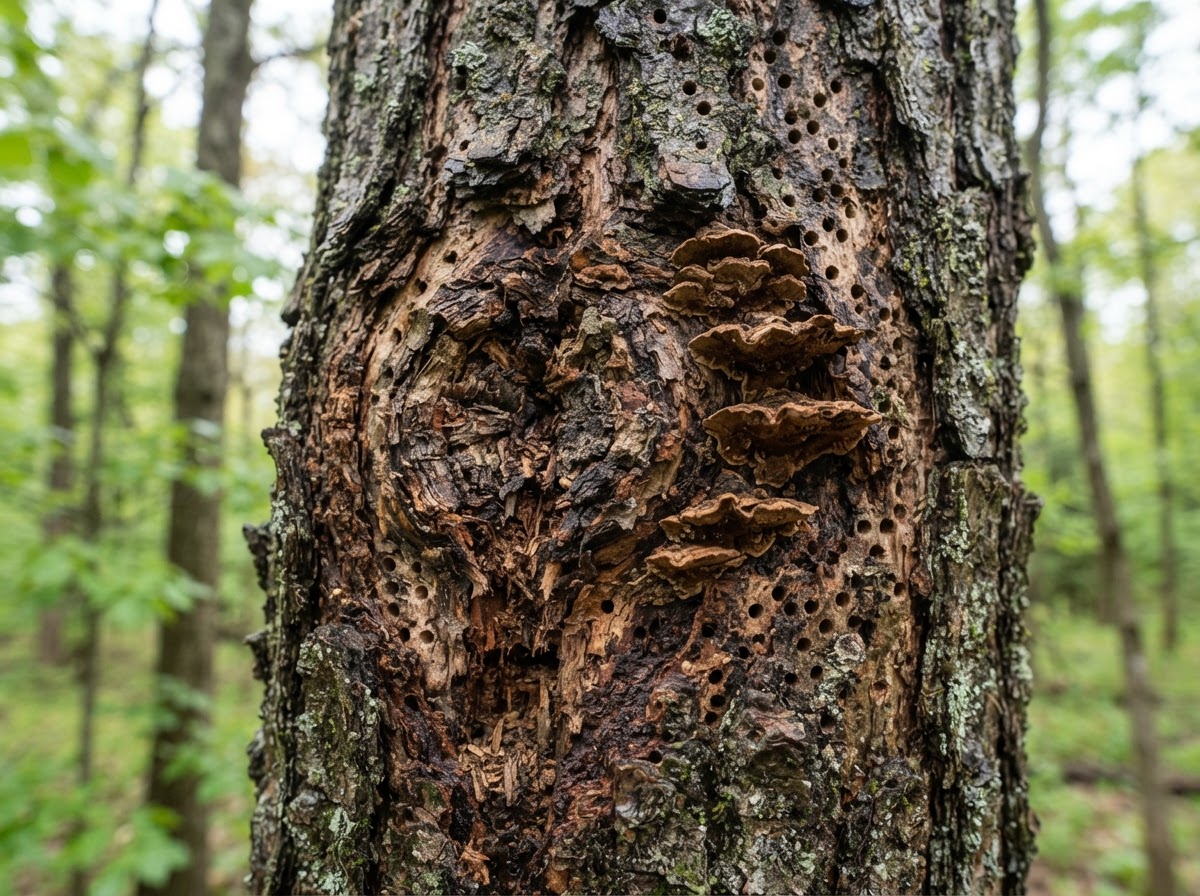
Adult Emerald Ash Borers leave small D-shaped exit holes when they emerge through the bark. These holes can be difficult to find, especially during an early infestation because activity may begin high in the tree.
Bark Splitting
Bark may begin to split over areas where larvae have been feeding underneath. Removing loose bark can sometimes reveal winding larval galleries beneath the surface.
New Shoots Growing From the Trunk or Lower Branches
Stressed ash trees may produce clusters of new shoots from the trunk or lower portions of the tree. This is sometimes called epicormic growth.
Branch Dieback
As damage increases, branches can begin dying throughout the canopy.
Woodpecker Activity
Increased woodpecker feeding on an ash tree can sometimes be associated with insects living beneath the bark. It is not proof of EAB by itself.
Important: One symptom does not confirm Emerald Ash Borer. Canopy thinning, bark changes, and dieback can all have other causes. Professional identification is recommended before any treatment decision is made.
Does Every Ash Tree With Dieback Have Emerald Ash Borer?
No. Ash trees in Colorado can decline for many reasons.
Drought stress, freezing injury, root problems, soil conditions, other wood-boring insects, disease, previous damage, and environmental stress can produce symptoms that look similar from the ground. Colorado also has other insects that attack ash trees.
That is why diagnosis matters. Treating for Emerald Ash Borer without confirming that the tree is an appropriate candidate for treatment can waste money and may not address the actual problem. An arborist can evaluate the species, canopy condition, bark, branch structure, site conditions, and visible symptoms before recommending a management plan.
Can an Ash Tree Be Protected From Emerald Ash Borer?
In many cases, healthy ash trees can be protected from Emerald Ash Borer with properly selected insecticide treatments. The important question is whether the tree is still healthy enough to justify treatment.
Treatment decisions should consider:
- overall tree health
- amount of canopy decline
- tree size
- structural condition
- location
- landscape value
- expected treatment cost over time
- whether the owner wants to preserve the tree
- how advanced an infestation may already be
Colorado State University notes that some trees with limited EAB damage may recover when professionally managed, while trees with extensive canopy loss may be too far declined for treatment to be practical. Treatment should not be viewed as an automatic recommendation for every ash tree. The tree should be evaluated first.
Should I Treat My Ash Tree Before I See Symptoms?
Waiting for obvious decline can make EAB management more difficult. Because Emerald Ash Borer can be present before symptoms become easy to see, owners of healthy, valuable ash trees should consider having them evaluated before severe canopy decline begins.
That does not mean every ash tree automatically needs treatment. A mature tree in good condition that provides significant shade or landscape value may be worth protecting. A tree with serious structural problems, poor condition, limited remaining life, or other major defects may not be a good long-term treatment candidate.
The decision should consider the whole tree, not simply whether it is an ash.
When Is an Ash Tree Too Far Gone?
There is no single visual rule that applies to every tree. As EAB damage becomes extensive, the tree loses more of the tissue needed to move water, nutrients, and systemic treatments through the canopy.
Severe canopy thinning, widespread branch death, poor structure, and extensive decline can reduce the likelihood that preservation will be successful. At that point, the conversation may shift from treatment to removal planning.
Waiting until a large ash tree is completely dead can also make eventual removal more complicated because dead trees continue losing structural integrity. If an ash tree is showing substantial decline, have it evaluated rather than waiting to see what happens.
What Should Denver Homeowners Do Now?
- 1
Figure Out Whether You Have an Ash Tree
If you are unsure of the species, have the tree identified before making decisions about EAB.
- 2
Look at the Overall Condition
Consider canopy density, dead branches, bark condition, structural defects, previous damage, and other signs of stress.
- 3
Do Not Wait for Severe Decline
Healthy ash trees have more management options than trees that are already heavily damaged.
- 4
Have Valuable Trees Evaluated
An arborist can help determine whether monitoring, treatment, or another management strategy makes sense.
- 5
Plan Ahead
EAB management is easier when decisions are made before an ash tree becomes severely compromised.
Local Arborist Guidance
Tree Pros and Emerald Ash Borer
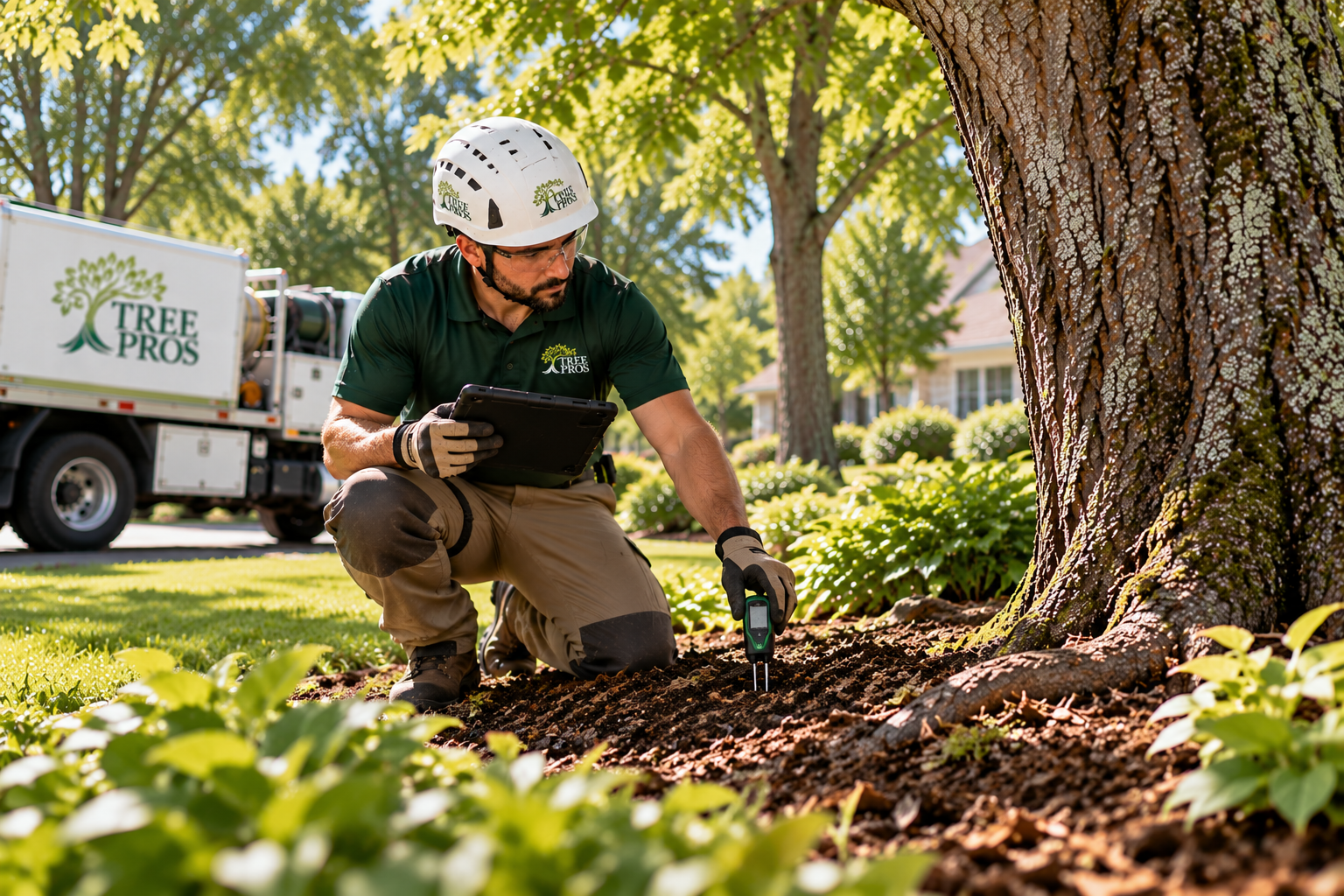
Tree Pros has cared for Denver-area trees since 2003, and founder Paul Goin has worked professionally in tree care since 1981. Our team includes three ISA Certified Arborists, and every crew leader is an ISA Certified Arborist.
When we look at an ash tree, the question is not simply whether Emerald Ash Borer exists in Denver. We look at the individual tree. That includes its health, structure, canopy condition, species, site, symptoms, landscape value, and reasonable management options.
A recommendation may involve monitoring, insect management, broader plant health care, or removal when preservation is no longer practical.
Reviewed for Tree Pros by arborist-led tree care professionals serving the Denver metro.
Sources and Learn More
- Colorado State University Extension: Emerald Ash Borer, Denver County
- Colorado State University Extension: Emerald Ash Borer, A Threat to Colorado's Urban Forests
- Colorado State University Extension: Recognizing Wood Boring Insects of Ash Trees in Colorado
- Colorado State University Extension: Insecticides Used to Control Emerald Ash Borer on Residential Shade Trees
- Colorado State Forest Service: Emerald Ash Borer